

An online casino may catch your attention with flashing lights and bold promises, but behind every spin of a digital reel and every virtual card dealt rests a piece of software that has to be provably unpredictable https://millionerbelgium.com/fr-be/legal-and-affiliates. That software is the Random Number Generator, and the document that confirms its integrity is an RNG certificate. In Belgium, where the Gaming Commission enforces strict technical standards, these certificates are not just paperwork; they are a legal safeguard. This guide describes what the certifications mean, how they are issued, and why they matter if you access a platform like Millioner Casino as a player or evaluate it as a potential affiliate partner. The certificate offers you a concrete way to confirm that fairness claim instead of taking it at face value.
What an RNG Functions in an Internet Casino
An RNG is a computational algorithm that produces a sequence of numbers unpredictable enough that neither a person nor a machine can guess the next value. In a casino, each number maps to a game outcome: a card pulled, a symbol appearing on a payline, or a roulette ball landing into a pocket. The generator runs nonstop, even when nobody is playing, cycling through millions of number combinations every second. The moment you click spin, the software takes the current number and transforms it into the result you observe on screen. This setup makes outcomes independent of your bet size, the time of day, and your previous wins or losses. If the RNG stops working correctly, the whole idea of fair online gambling falls apart, and that is why independent verification counts.
The purpose of Accredited Testing Laboratories
Not all test houses carry the same weight. Accreditation is what separates the serious ones from the rest. Laboratories like GLI, iTech Labs, and BMM Testlabs have earned recognition from several national regulators, among them the Belgian Gaming Commission. These companies employ mathematicians, software engineers, and statisticians who specialise in gaming systems. Their evaluation extends beyond a simple pass-or-fail check; they assess how the RNG is implemented within the full game logic and confirm that nor the game developer nor the casino operator can manipulate the final output. When we review a certificate, we look for the laboratory’s accreditation mark and check it against the regulator’s list of approved test houses. We apply that same due diligence at Millioner Casino because a certificate from an unaccredited or obscure entity gives no real protection to anyone.
RNG Certifications and Belgium’s Gambling Rules
Belgium runs one of the most rigorously managed online gambling frameworks in Europe. The Gaming Commission requires that every game offered by a licensed operator be tested and certified by an accredited laboratory before Belgian residents can access it. This rule applies to local licensees and to foreign operators holding a Belgian A+ or B+ licence. The regulator maintains a list of approved test houses, and a certificate from any laboratory outside that list will not meet compliance requirements. For players, this means any casino legally serving the Belgian market must present valid RNG certificates that meet national standards. We always recommend reviewing a platform’s licence number on the Gaming Commission’s website and then confirming that the RNG certificate lines up with the regulator’s technical directives. That simple cross-check can filter out unlicensed operators targeting Belgian users without authorisation.
How RNG Fairness Influences Affiliate Partnerships
Affiliates promoting online casinos in Belgium hold a responsibility that goes beyond commission rates. When we evaluate a potential affiliate partnership, the presence of verifiable RNG certification is one of the first signs a brand can endure over the long term. An operator that invests for proper testing is less likely to face regulatory sanctions, sudden licence revocations, or player disputes that could harm the affiliate’s reputation. We have seen cases where affiliates promoted unlicensed platforms that later collapsed amid fairness scandals, leaving players and partners with heavy financial losses. At Millioner Casino, we urge our affiliates to view our certification transparency as a trust signal in their own content. A partner who can point to an active, accredited RNG certificate gives their audience a concrete reason to choose the recommended brand over a competitor with vague fairness claims.
The reason Independent Testing Is Important
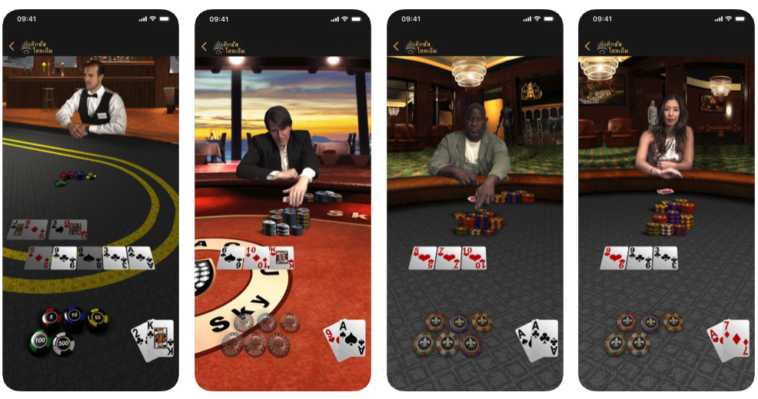
Operators often say their games are fair, but a claim without third-party proof carries little weight in a regulated market like Belgium. Independent testing eliminates the operator from the verification loop. An external laboratory analyses the RNG’s source code, runs statistical simulations across millions of game rounds, and tests for bias or predictability. The casino cannot carry out this process itself because even unintentional flaws can appear in proprietary algorithms. A certificate from an accredited test house tells us that a disinterested party has confirmed the RNG produces outcomes statistically indistinguishable from true randomness. For Belgian players, that outside scrutiny matches the Gaming Commission’s expectation that games get tested before they ever arrive at the public, and that requirement offers players an extra layer of protection.
Grasping the Certificate Itself
When we examine an RNG certificate, we do not merely glance at for a logo. A real certificate specifies the testing laboratory’s name, the date of issue, the expiry date, and a unique report number you can verify on the lab’s public register. It also details the specific games or RNG classes that were tested, since a certificate for a slot game does not automatically cover a live casino random draw. We recommend anyone in Belgium to verify that the certificate’s scope corresponds fr.wikipedia.org to the games they plan to play. At Millioner Casino, we keep these documents available because we see transparency as a fundamental duty, not a marketing tactic. A certificate concealed behind a login wall or shown as a minute, unreadable image on a terms page often means the operator would rather you not scrutinize the details too closely.
How a Certification Audit Takes Place
The audit begins when the laboratory receives the RNG’s source code and technical documentation under strict confidentiality. Experts review the code to ensure the algorithm employs a truly random seed, often sourced from hardware entropy, and that no undisclosed logic could favour the house beyond the stated return-to-player percentage. After that, they run extensive simulations, sometimes generating billions of outcomes, and apply statistical tests such as chi-squared analysis and diehard tests to identify patterns. If the RNG meets the criteria, the lab grant a certificate that lists the scope of testing, the game versions covered, and the validity period. We view it reassuring that this is not a one-time event. Certificates typically demand periodic renewal, and any significant update to the game software triggers a re-audit. That ongoing oversight maintains the playing field level over time.
Red Flags That Suggest a Absence of Proper Certification
As time has passed, we have developed the ability to spotting warning signs that an operator may be cutting corners on RNG testing. One frequent red flag is a certificate that has run out or pertains to a distinct regulatory region than the one where the casino operates. Another is self-certification, where a game developer asserts it has tested its own RNG without outside supervision. In Belgium, self-certification holds no legal value under the Gaming Commission’s rules. We also get suspicious when a casino displays a certificate only for its platform RNG but not for the particular game studios it hosts, because a multi-provider casino must guarantee every game from external developers has been independently verified. Lastly, if a certificate cannot be confirmed via the laboratory’s online portal, we regard the casino’s fairness claims as unsupported. These are not small details; they are fundamental flaws that can subject players to manipulated results.
The way Millioner Casino Approaches RNG Transparency
At Millioner Casino, we consider RNG certification as a indispensable part of our bond with players and affiliates in Belgium. Every game we present, whether built in-house or supplied by a third-party studio, holds a current certificate from an accredited laboratory recognised by the Belgian Gaming Commission. We do not conceal these documents in fine print; we keep them available for inspection because we wish anyone who visits our platform to check our fairness for themselves. Our affiliate partners receive clear, factual information about our testing standards, which they can employ to build honest, compelling content for their audiences. In a market as developed and regulated as Belgium, trust cannot be assumed. It has to be demonstrated with concrete evidence. That is why we persist investing in rigorous, ongoing RNG audits that go beyond the minimum legal requirements, so every spin, every hand, and every dice roll stays genuinely unpredictable.